Collection
Quiet Earth
Mineral browns, clay, and dry greens.
Explore →How mineral colour and quiet scale help an original oil painting belong to a lived-in room.
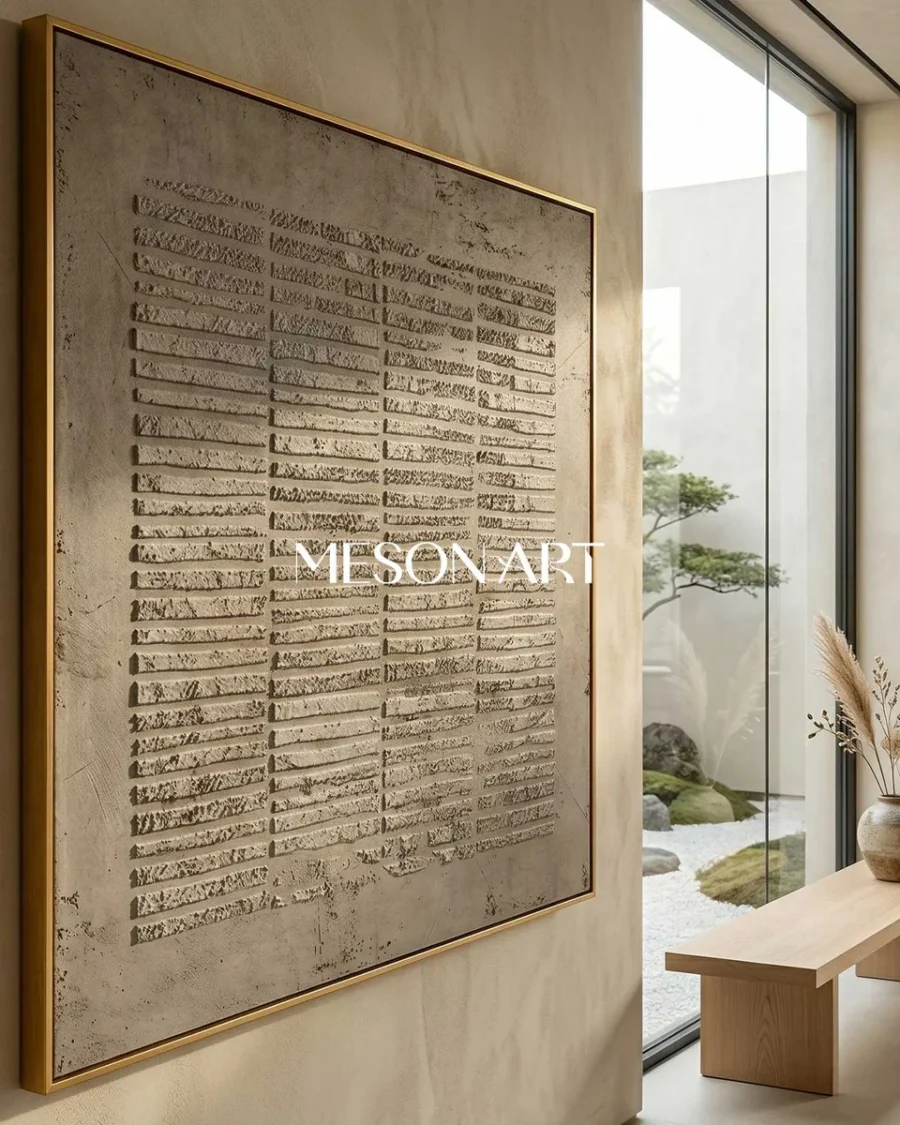
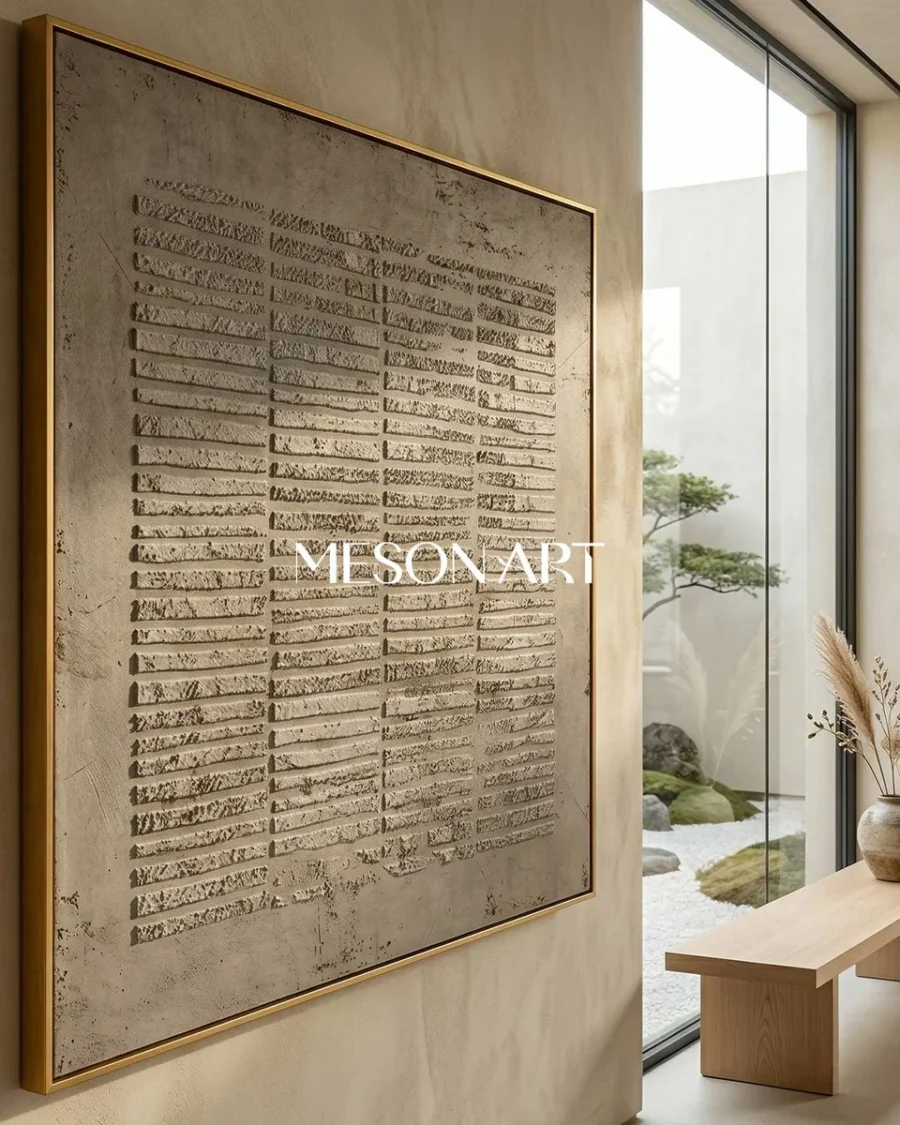
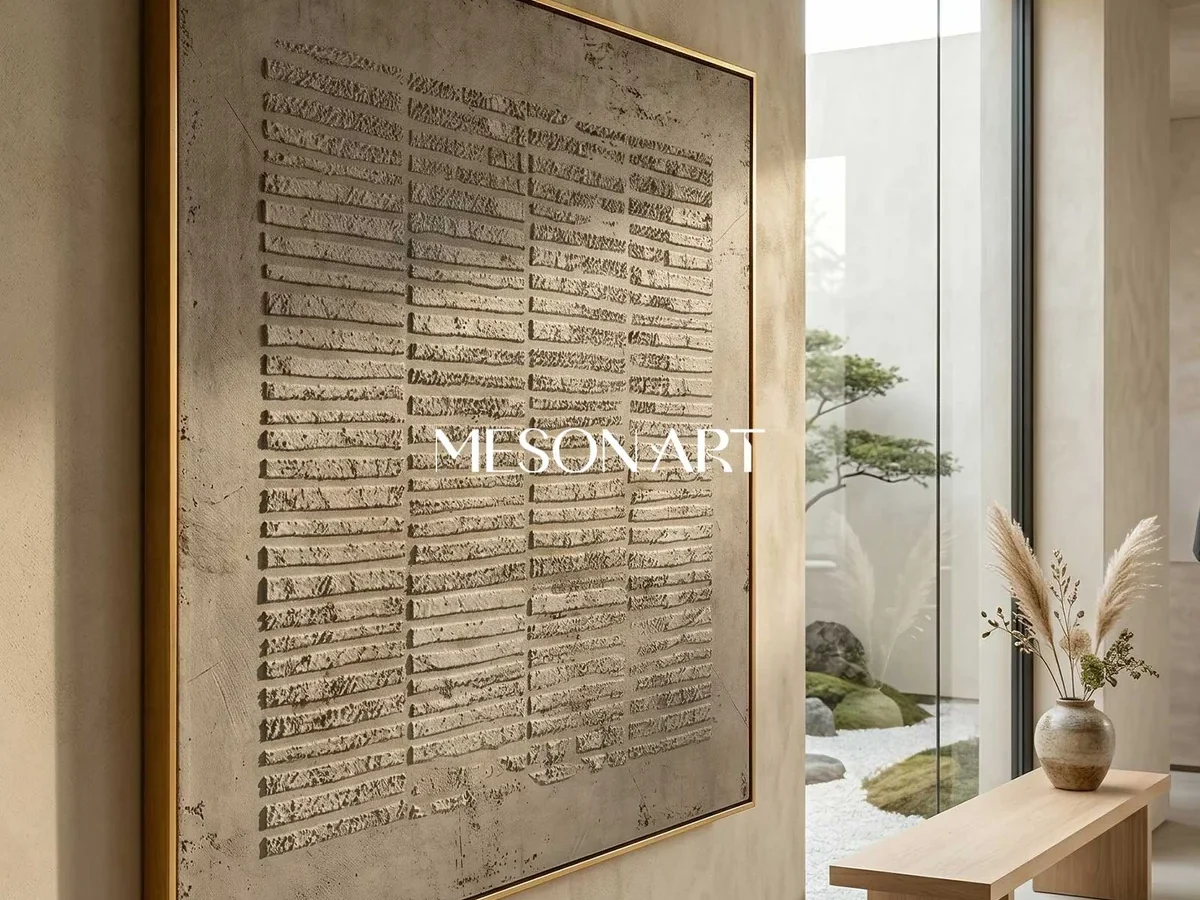
Quiet walls ask for paintings that settle rather than announce themselves. Mineral colour — chalk, clay, soft ochre — tends to belong to plaster and oak instead of floating above them.
Before choosing a canvas, notice how light moves across the surface through the day. North light stays cool; afternoon sun warms plaster. A painting that works at noon may feel thin by evening if the palette fights the room.
Wabi-sabi palettes favour pigments that feel dug from the ground: iron oxide, umber, diluted white. They read as atmosphere rather than decoration, which is why they hold up next to linen, stone and unfinished wood.
A quieter room often wants fewer, larger works — not a cluster of small statements. Leave breathing room around the frame so the wall remains part of the composition.
Original oil shifts as varnish and light settle. Give the piece a week on the wall before judging the hang height or neighbouring furniture. Quiet art rewards patience more than rearrangement.
Notes on rooms, collections, and new paintings — continue into the shop, buying guides or lookbook.